
Introduction
SEO, AEO, and GEO are three important approaches used in digital marketing today. Although they are closely connected, each one has a different purpose.
SEO (Search Engine Optimization) mainly focuses on improving a website’s visibility in traditional search engine results. AEO (Answer Engine Optimization) focuses on creating content that can clearly answer users’ questions. GEO (Generative Engine Optimization) focuses on making online information easier for generative AI systems to understand and potentially use when creating answers.
A simple line you can use:
SEO, AEO, and GEO are important digital marketing strategies that help businesses improve their online visibility and reach the right audience.
Add brief definitions for SEO, AEO, and GEOMake the sentence more engaging
At Digital Learning Point Haldwani, understanding the difference between these approaches can help businesses create a stronger online presence across traditional search engines and newer AI-powered search experiences.
How DLP Can Use SEO, AEO & GEO Together
- SEO se website ki search visibility
- AEO se questions ke direct answers
- GEO se AI platforms par brand visibility
- Teeno ko combine karke DLP ki online presence improve karna
What is AEO?
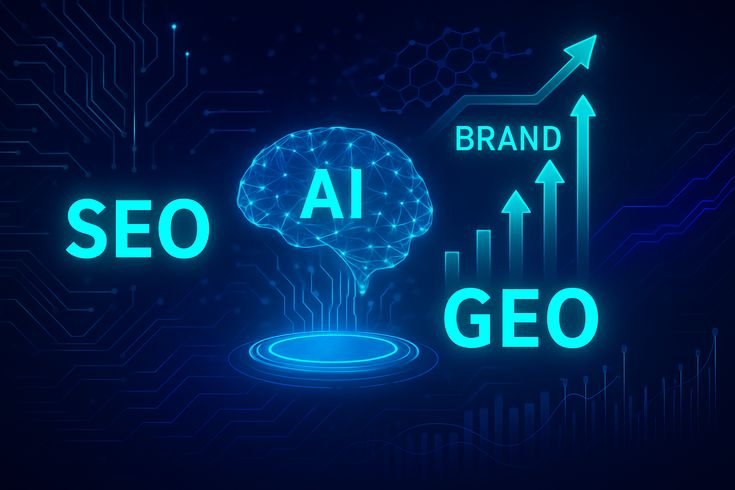
SEO, AEO and GEO in Digital Marketing
AEO (Answer Engine Optimization) is the practice of creating and organizing content in a way that makes it easier for search engines, AI systems, voice assistants, and answer-based search features to understand and provide useful answers to users.
Traditional SEO is often associated with improving a webpage’s position in search results. AEO puts more emphasis on answering the actual question clearly and directly.
For example, instead of writing a long paragraph before answering a question, AEO-friendly content can provide the answer near the beginning and then explain it in more detail.
Example of AEO
Question:
“What is SEO?”
AEO-friendly answer:
“SEO (Search Engine Optimization) is the process of improving a website so it can appear more prominently in search engine results and attract relevant organic traffic.”
This answer is short, direct, and easy to understand. Clear answers like this can make information easier for answer engines and AI-powered search features to process.
In simple words:
AEO = Creating content that clearly answers users’ questions.
AEO is particularly useful because people are increasingly searching for information by asking complete questions rather than entering only one or two keywords.
AI systems can also consider the meaning, context, relevance, and credibility of information rather than simply matching individual keywords. This makes clear and well-organized content increasingly important.
How to Improve AEO
Improving AEO involves making your content easy for both people and information systems to understand.
1. Answer Questions Clearly
Find genuine questions your customers ask and answer them directly. FAQs, guides, and question-based content can be useful for this purpose.
2. Keep Your Content Well Organized
Use clear headings, short paragraphs, bullet points, and logical sections. A well-organized page makes it easier to identify the important information.
3. Use Clear and Factual Statements
Write sentences that communicate information directly. Avoid unnecessary wording when a simple explanation can answer the question.
4. Use Schema Markup
Where appropriate, use structured data to describe information such as your business, services, products, and FAQs. This can help search engines better understand the content of a webpage.
5. Build Online Credibility
Genuine reviews, relevant mentions, citations, and references from trustworthy sources can contribute to a stronger online presence.
6. Focus on Search Intent
Understand what people actually want to know when they search for a particular topic. Create content that addresses that need rather than simply adding keywords.
7. Maintain Consistent Brand Information
Keep your business name, services, descriptions, and other important details consistent across your website, directories, social media profiles, and other online platforms.
8. Build Your Presence Beyond Your WebsiteAapke paragraph ke baad ye line naturally fit hogi:
SEO, AEO, and GEO help businesses improve their online presence, appear in search results, provide useful answers, and become more visible on AI-powered platforms.
Add a simple explanation of SEO, AEO, and GEOInclude a practical example for beginners
The Bigger Picture of AEO
AEO is not simply about trying to influence an algorithm. At its core, it is about making useful information easier to understand.
A strong AEO approach helps communicate three basic things:
- Who the business is
- What the business offers
- Why its information is useful and relevant
As users increasingly turn to AI-powered tools and answer-based search experiences for information, businesses can benefit from creating content that is clear, useful, trustworthy, and easy to understand.
Summary of AEO
AEO, or Answer Engine Optimization, focuses on creating content that can clearly respond to users’ questions.
While SEO generally focuses on improving visibility in search results, AEO gives greater importance to direct answers, question-based content, structured information, FAQs, and clear explanations.
An AEO strategy can include relevant topics and keywords, structured content, schema markup, customer reviews, online mentions, and consistent business information.
In simple terms:
AEO is about making your content easy to understand so that answer-focused search experiences can identify useful information for users.
What is GEO?
Generative Engine Optimization (GEO)
GEO (Generative Engine Optimization) is the process of creating and improving online content so that generative AI systems can find, understand, and potentially reference information about a brand, business, product, or topic when generating answers.
Traditional SEO is mainly concerned with visibility in search engine results. GEO is more closely connected with the way information is discovered and presented through generative AI and AI-powered search experiences.
For example, imagine someone asks an AI platform:
“Which digital marketing institute is suitable for beginners?”
A GEO-focused strategy aims to build a strong and consistent online presence so that AI systems can better understand relevant information about a business when generating an answer.
GEO can involve many types of online information, including:
- Helpful articles
- FAQs
- Website content
- Reviews
- Business listings
- Relevant mentions
- Expert information
- Social media content
- Online references and citations
The overall idea is to create a clear digital identity for the brand.
In simple words:
GEO = Making your brand and content easier for AI systems to understand and potentially mention in generated answers.
How to Improve GEO
Improving GEO involves more than simply adding keywords to a website. It requires building useful, clear, and consistent information about your brand across the web.
1. Create Helpful Content
Write content that solves real problems and provides useful information. Avoid creating content only for promotional purposes.
For example, instead of writing only about your course, you could create an article explaining how beginners can choose a digital marketing course.
2. Answer Real Questions
Create FAQs, guides, blogs, and short explanations around questions that your target audience commonly asks.
Direct answers can make the information easier to understand and organize.
3. Use Simple and Clear Language
Avoid unnecessarily complicated sentences and technical terms when they are not needed.
Use:
- Clear headings
- Short paragraphs
- Bullet points
- Simple explanations
- Relevant examples
4. Build Brand Authority
Try to establish your business as a reliable source of information within your industry.
Relevant mentions on websites, directories, review platforms, blogs, and other trusted sources can help create a stronger online presence.
5. Keep Brand Information Consistent
Your business name, services, descriptions, contact details, and other important information should be consistent wherever your business appears online.
Inconsistent information can make it harder to establish a clear digital identity.
6. Use Keywords Naturally
Include the terms your audience actually searches for, but avoid stuffing the same keyword repeatedly into your content.
Focus on the topic, meaning, and search intent behind the query.
7. Use Schema Markup
Structured data can help search engines understand specific information on your website, such as business details, services, products, and FAQs.
8. Build Genuine Online Mentions
Encourage genuine reviews and relevant references to your business. Useful mentions across different platforms can contribute to a broader online presence.
9. Keep Your Content Updated
Review older content regularly. Update outdated information, add useful details, and remove information that is no longer accurate.
10. Create a Strong Online Presence
Do not depend entirely on your website. Maintain relevant business listings, social media profiles, review platforms, articles, and other useful online resources.
In Simple Words
SEO = Help your website get found in search results.
AEO = Help your content provide clear answers.
GEO = Help AI understand your brand and information and potentially mention it in generated answers.
Introduction to SEO
SEO (Search Engine Optimization) is the process of improving a website and its content so that it can appear more prominently in search engine results such as Google and Bing.
Whenever someone searches for a product, service, question, or piece of information, search engines evaluate different factors to determine which pages may be relevant and useful.
SEO helps a website communicate its topic more clearly to search engines while also improving the experience for visitors.
SEO can include activities such as:
“Understanding SEO AEO GEO can help businesses improve their online visibility
- Keyword research
- On-page optimization
- Technical SEO
- Content creation
- Internal linking
- Website speed optimization
- Backlink building
- Local SEO
- User experience improvements
For example, if someone searches for:
“digital marketing course in Haldwani”
a digital marketing institute can optimize its website and content around relevant topics to improve its opportunity to appear in search results.
In simple words:
SEO = Improving your website so the right people can find it through search engines.
The main purpose of SEO is to attract relevant organic traffic and help users discover useful information, products, or services without depending entirely on paid advertising.
What is SEO?
SEO is not only about inserting keywords into a webpage. Modern SEO involves improving the overall quality, relevance, accessibility, and technical health of a website.
Search engines consider many different signals when determining which pages to show for a particular search.
An SEO strategy may include:
- Keyword research
- Useful content creation
- On-page SEO
- Technical SEO
- Website speed optimization
- Internal linking
- Backlink building
- Mobile optimization
- User experience
- Local SEO
For example, a business targeting the keyword “digital marketing course in Haldwani” can create a useful page explaining its courses, learning options, location, and other relevant information while optimizing the technical and on-page elements of the website.
The goal is not simply to rank for one keyword. A good SEO strategy aims to help search engines understand the website and help the right audience find relevant information.
“Understanding SEO AEO GEO can help businesses improve their online visibility
How to Improve SEO
Improving SEO means making a website more useful, relevant, trustworthy, and easier for search engines to understand.
1. Do Proper Keyword Research
Identify the words and phrases your target audience uses when searching for information.
Choose keywords that are relevant to your business and use them naturally in your website pages, headings, articles, and other content.
2. Create High-Quality Content
Create original and useful content that answers questions and solves problems for your audience.
Instead of writing only to include keywords, focus on giving readers information they can actually use.
3. Improve On-Page SEO
Optimize important webpage elements such as:
- Page titles
- Headings
- Meta descriptions
- URLs
- Images
- Internal links
- Content structure
Each page should have a clear topic and purpose.
4. Improve Website Speed
A slow website can create a poor experience for visitors.
Compress large images, remove unnecessary elements, and improve technical performance so pages load efficiently.
5. Make Your Website Mobile-Friendly
Your website should work properly on smartphones and other screen sizes.
Make sure the text is readable, navigation is simple, and buttons are easy to use.
6. Use Internal Linking
Connect related pages on your website using relevant internal links.
This helps visitors discover additional information and can help search engines understand the structure and relationships between pages.
7. Build Quality Backlinks
A backlink is a link from another website to your website.
Relevant and trustworthy backlinks can contribute to a website’s authority. The focus should be on quality and relevance rather than collecting a large number of low-quality links.
8. Improve Technical SEO
Technical SEO helps search engines crawl and understand your website.
It can include:
- XML sitemaps
- Robots.txt
- HTTPS
- Canonical tags
- Broken-link fixes
- Redirects
- Website structure
- Structured data
9. Optimize Images
Use suitable image file names and descriptive alt text. Compress images where possible so they do not unnecessarily slow down the website.
Image optimization can also support accessibility.
10. Create a Good User Experience
Make your website easy to navigate.
Use clear menus, readable content, logical page structures, and useful calls to action.
11. Keep Content Updated
Review older content regularly and update information when necessary.
Remove outdated information and add new details when they provide value to the reader.
12. Optimize for Local SEO
Businesses serving a particular location can optimize their online presence for local searches.
Keep business information accurate and consistent across relevant platforms and directories. Maintain useful business-profile information and encourage genuine customer reviews.
13. Use SEO Tools
SEO tools can help identify keywords, technical problems, website performance issues, backlinks, and competitor information.
Examples include:
- Google Search Console
- Google Analytics
- Google Keyword Planner
- Ahrefs
- Semrush
- Screaming Frog
Different tools are useful for different parts of an SEO strategy.
14. Monitor SEO Performance
SEO is an ongoing process. Regularly monitor metrics such as:
- Organic traffic
- Clicks
- Impressions
- Keyword visibility
- Search rankings
- Conversions
- Indexed pages
These insights can help identify areas that need improvement.
“Understanding SEO AEO GEO can help businesses improve their online visibility
In Simple Words
Good SEO = Relevant keywords + useful content + technically healthy website + good user experience + quality backlinks + continuous improvement.
The goal of SEO is not simply to achieve a higher position in search results. It is also about helping search engines understand your website and helping users find useful information.
Difference Between SEO, AEO and GEO
Aapke paragraph ke baad ye line naturally fit hogi:
SEO, AEO, and GEO help businesses improve their online presence, appear in search results, provide useful answers, and become more visible on AI-powered platforms.
Add a simple explanation of SEO, AEO, and GEOInclude a practical example for beginners
SEO, AEO, and GEO are connected, but they focus on different forms of online discovery.
| SEO | AEO | GEO |
| Search Engine Optimization | Answer Engine Optimization | Generative Engine Optimization |
| Focuses on search engine visibility | Focuses on direct answers | Focuses on AI-generated responses |
| Helps websites appear in search results | Helps content provide useful answers | Helps AI systems understand and potentially mention information |
| Uses keywords, content, links, technical SEO, and website optimization | Uses direct answers, FAQs, structured content, and schema | Uses useful content, online mentions, citations, authority, and consistent information |
| Mainly associated with traditional search engines | Associated with answer-focused and AI-powered search experiences | Associated with generative AI and AI-powered search |
Simple Example
Suppose someone asks:
“Which digital marketing course is suitable for beginners?”
SEO:
Helps a website improve its visibility for relevant searches.
AEO:
Organizes the content so an answer-focused system can identify a clear response to the question.
GEO:
Helps create a broader and consistent online presence so generative AI systems can better understand relevant information about the business.
SEO, AEO and GEO in One Line
SEO → Get found in search results.
AEO → Provide clear answers.
GEO → Help AI understand and potentially mention your information.
How They Work Together
SEO, AEO, and GEO can be used together rather than treating them as completely separate strategies.
For example, a digital marketing institute can use:
SEO to improve its website’s visibility in traditional search results.
AEO to answer common questions such as “What is digital marketing?” or “Which course is suitable for beginners?”
GEO to maintain useful and consistent information about the institute across its website and relevant online platforms so AI-powered systems can better understand the brand.
Together, these approaches can help a business build a stronger presence across traditional search, answer-based discovery, and AI-powered search experiences.
The overall focus is simple: make your information easy to find, easy to understand, useful to users, and consistent across the web.